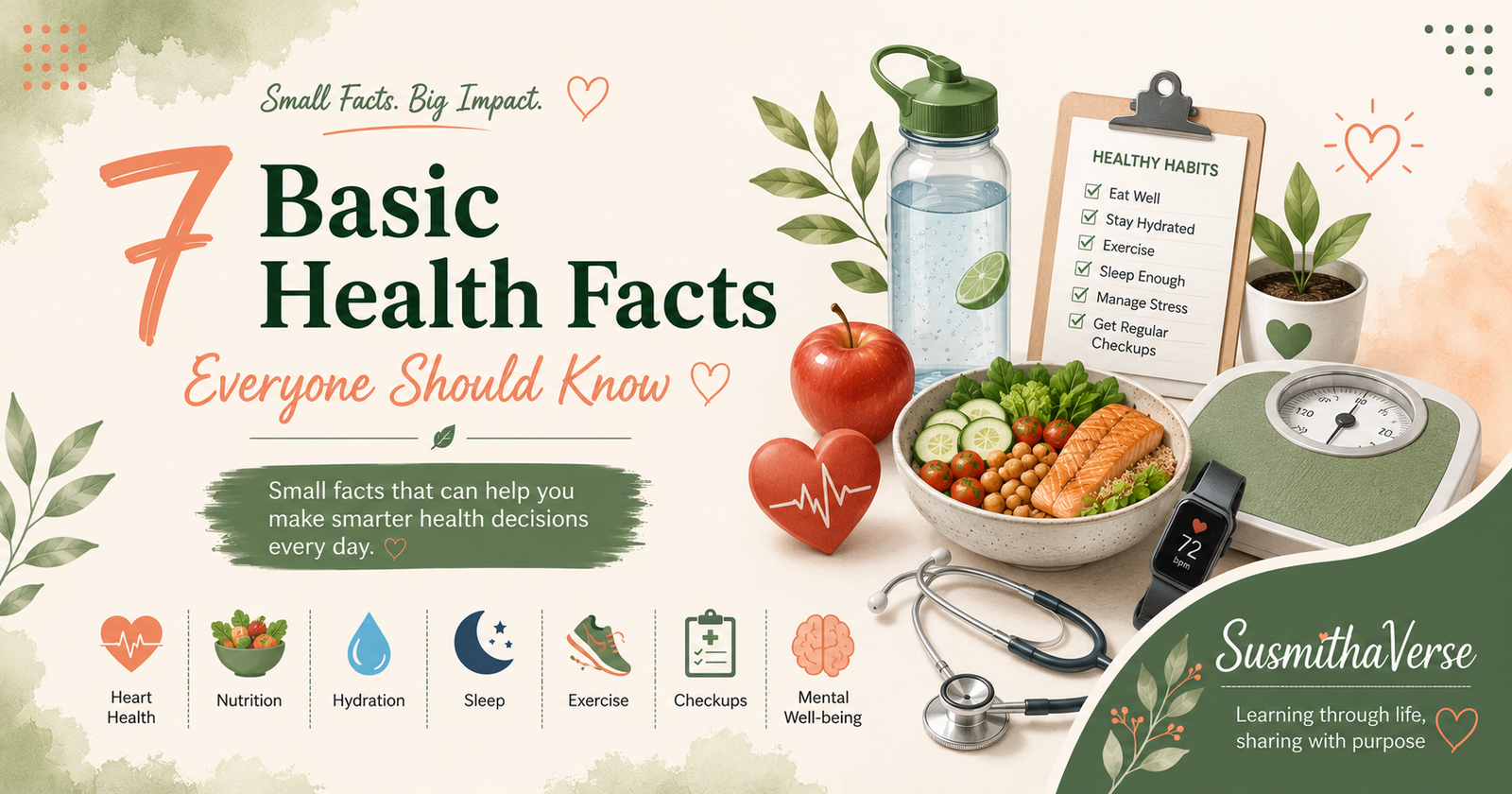
7 Basic Health Facts You Should Know (and the Science Behind Them)
These basic health facts are the foundation of feeling good every day — yet in today’s fast-paced world, health advice is everywhere: on social media, in conversations with friends, and across countless articles online. But with so much information floating around, it’s easy to feel confused about what’s actually important for your well-being. The truth is, while new diets, fitness fads, and supplements often come and go, the foundation of good health rests on a few simple, science-backed principles that have stood the test of time.
Understanding these basic health facts can make a huge difference in how you feel every day. From the role of water in keeping your body energized, to the power of sleep as your body’s natural healer, these essentials aren’t complicated—but they are often overlooked. Think of them as the building blocks for a healthier, longer, and more fulfilling life.
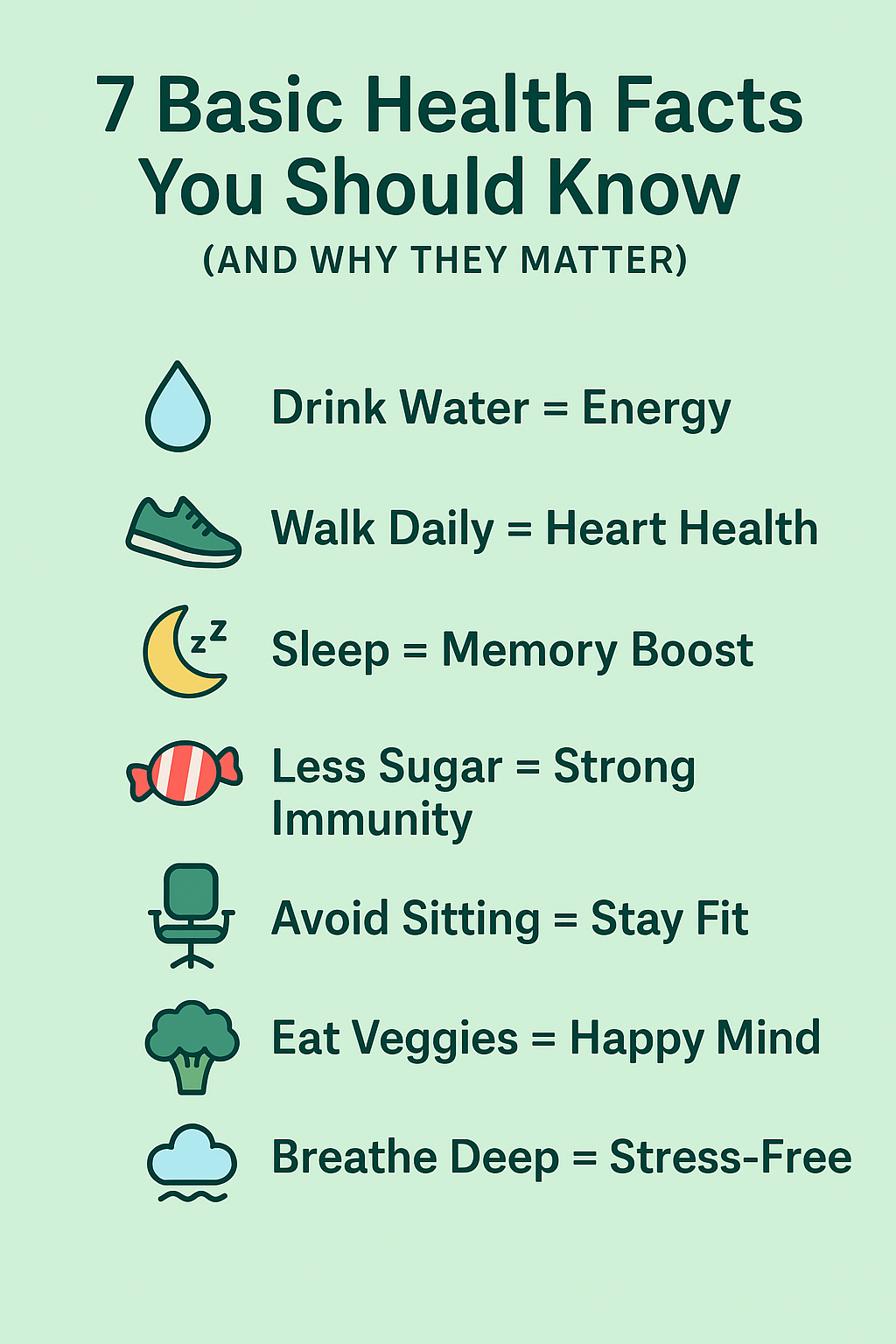
So, let’s break down 7 simple health facts that are backed by science, along with the reason why they matter in everyday life.
Hydration is the Foundation of Health 💧
“This is one of the most basic health facts, yet it’s the most skipped.”
The Science:
Water makes up about 60% of your body. It supports every major function—from carrying nutrients to cells, lubricating joints, aiding digestion, regulating temperature, and even boosting brain function. Even mild dehydration can cause fatigue, headaches, and poor concentration.
Quick Tips:
Aim for 8–10 glasses of water daily (adjust based on your climate and activity level). – I hydrate myself by taking water sip by sip to avoid rushing to the bathroom 😬
Carry a reusable water bottle to remind yourself to sip throughout the day. – Sometimes I invest in bottle/sipper purchases for that extra motivation
Flavor your water with lemon, mint, or cucumber if plain water feels boring.
Sleep is Your Natural Healer 😴
The Science:
Sleep isn’t just “rest”—it’s when your body repairs muscles, consolidates memories, balances hormones, and strengthens immunity. Adults generally need 7–9 hours of quality sleep per night. Lack of sleep is linked to weight gain, poor focus, weaker immunity, and higher risk of chronic diseases.
Quick Tip:
Maintain a consistent bedtime and wake-up schedule.
Avoid screens at least 30–60 minutes before sleep.
Keep your bedroom cool, dark, and quiet.
– This is a magic hack to me
Nutrition is More Than Calories 🥗
The Science:
Your body doesn’t just need energy—it needs the right nutrients: protein, healthy fats, fiber, vitamins, and minerals. A balanced diet reduces the risk of heart disease, diabetes, and nutrient deficiencies.
Quick Tip:
Follow the “plate method”: half your plate vegetables, a quarter lean protein, and a quarter whole grains.
Limit processed and packaged foods high in sugar, salt, and trans fats.
Include a rainbow of fruits and veggies for a variety of micronutrients.

Movement Matters—Even in Small Doses 🚶♀️
“This is one of those basic health facts that’s simple but easy to ignore.”
The Science:
Physical activity strengthens the heart, lungs, and muscles, while boosting mood and lowering the risk of chronic illness. You don’t need to run marathons—even 30 minutes of moderate movement daily (like brisk walking, cycling, or yoga) makes a big impact.
Quick Tip:
Break activity into short bursts (e.g., 10 minutes × 3 times daily).
Use stairs, walk during calls, or stretch at your desk.
Mix cardio with strength training to support both heart health and muscle strength.

My top recommendations:
- Google Fit (Android) (App Store)
- Apple Fitness App
- Fitbit (Android) (App Store)
Stress Management Protects Your Body 🧘
The Science:
Chronic stress increases cortisol, which affects your heart, digestion, sleep, and even immunity. While short-term stress can be motivating, long-term stress is harmful.
Quick Tip:
Try mindfulness practices like meditation or deep breathing.
– Trust me, deep breathing method while in stress works wondersJournal for 5 minutes daily to clear your thoughts.
– I tried journaling to track my fitness journey and note down milestoneSpend time outdoors—nature helps lower stress hormones.
– I make sure to go for a short drive, at least to a nearby supermarkets or a stationary store 😉
Prevention is Better Than Cure 🩺
“Of all the basic health facts on this list, this one is the easiest to put off.”
The Science:
Early detection saves lives. Regular check-ups and screenings can identify potential health issues before they become serious. Vaccinations also protect against preventable diseases.
Quick Tip:
Schedule annual health check-ups (blood sugar, cholesterol, BP, thyroid, etc.).
Stay up to date with vaccinations.
Don’t ignore warning signs like persistent fatigue, pain, or unexplained weight changes.
Mental Health is Just as Important as Physical Health 🧠
The Science:
Your mind and body are deeply connected. Mental health challenges like anxiety, depression, or burnout directly affect physical health. Taking care of your mental well-being is not optional—it’s essential.
Quick Tip:
Talk openly about your feelings with trusted friends or family.
Seek professional help if needed—therapy is strength, not weakness.
Prioritize hobbies, social connections, and downtime.
My experience:
Never underestimate your mental well-being at any cost!
Final Thoughts on These Basic Health Facts
Good health isn’t about perfection—it’s about consistency in the basics. By focusing on hydration, sleep, balanced nutrition, movement, stress management, prevention, and mental well-being, you’re setting yourself up for long-term energy, resilience, and happiness.
Remember, you don’t need to change everything overnight. Start small—pick one or two health facts from this list and practice them daily. Over time, these small shifts will compound into powerful, lifelong benefits.
Your health is your greatest investment—treat it with care, and it will serve you well for years to come. 🌿✨