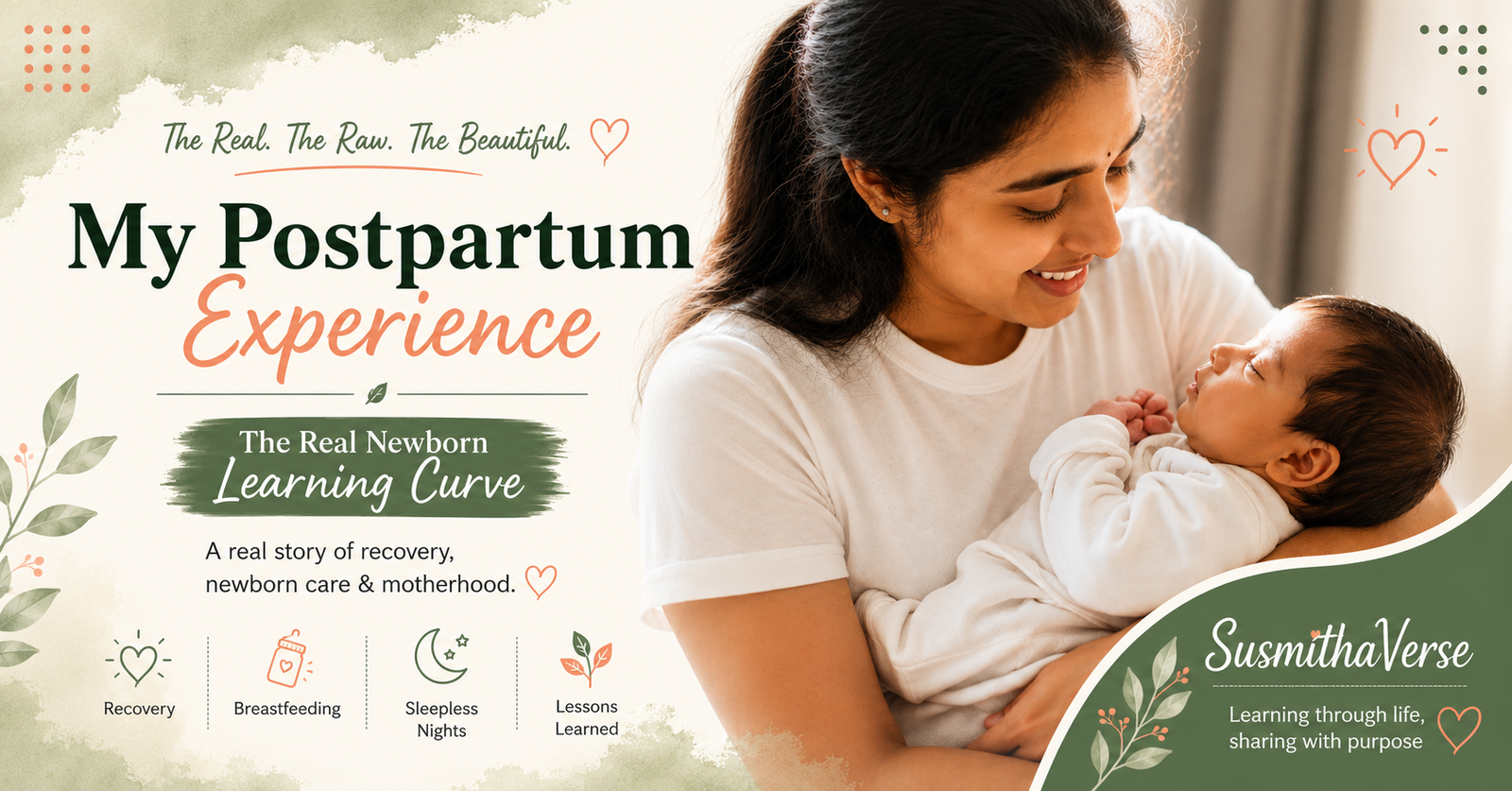
My Postpartum Experience: The Real Newborn Learning Curve
Disclaimer
This post shares my personal postpartum experience and isn’t medical advice. Every recovery and every baby is different — always consult your doctor for anything concerning, especially around physical recovery, pain, or bleeding.
Everyone prepares you for labor. Nobody really prepares you for after.
I genuinely thought the hard part was getting through delivery. And then I got home, and realized I had no idea what was coming next. This is what those first few months actually looked like for me — the recovery, the breastfeeding struggles, and just trying to figure out my baby day by day.
Recovery Took Way Longer Than I Expected
I think I assumed I’d feel mostly “normal” again within a couple of weeks. That wasn’t even close to true.
The stitches took a while to heal, and sitting comfortably felt like a luxury for longer than I expected. I also dealt with some hemorrhoid-related discomfort after delivery, which I genuinely hadn’t braced myself for, and constipation became its own daily battle. Drinking duphalac, eating pears and fibre-rich foods, trying to figure out which positions hurt less while sitting or feeding — this became a strange new part of my daily routine that I never imagined I’d be researching.
There were days the pain felt manageable, and other days it genuinely wasn’t. At one point I needed a doctor’s opinion on the hemorrhoids specifically, which honestly made me realize how much of postpartum recovery just isn’t talked about openly — the bleeding, the slow healing, the discomfort that lingers — it’s all very real and very common, but it can feel isolating when you’re going through it and don’t see anyone else mention it.
What actually helped: finding the right sitting position for breastfeeding without aggravating the stitches, staying ahead of constipation with foods like pears and oats, and just accepting that 6 weeks wasn’t some magic finish line — healing kept happening well past that. A postpartum back support belt also made a real difference for me — between all the feeding sessions and carrying the baby, my back was taking a beating, and having that extra support genuinely helped reduce the severity of the pain.
One thing I’ll always be grateful for through this stretch — my partner stepping in for burping and feeding duties whenever he could. Having that support, even just so I could rest a little or heal without doing absolutely everything myself, made such a real difference. I know not everyone has that, and I don’t take it for granted.
I also dealt with frequent muscle cramps in my legs during this period, which caught me off guard. After consulting my doctor, eating more bananas and taking a magnesium supplement genuinely helped ease this. On a related note — at one point I paused my calcium and iron supplements for a while, thinking I didn’t need them as much anymore, and I really felt the difference. I’d strongly encourage not skipping these unless your doctor specifically tells you to; I learned that the hard way.
Breastfeeding Was Its Own Full-Time Learning Curve
I didn’t expect breastfeeding to be this hard to figure out.
My baby girl struggled to latch properly from the very start — she’d often fall asleep within 5-10 minutes without latching deeply, which meant she wasn’t always getting enough, and then she’d want to feed again almost immediately. For a while I was feeding her every hour, sometimes every 30 minutes, and I genuinely didn’t know if that meant my supply was low or if this was just normal newborn behavior.
I went back and forth between exclusively breastfeeding, combination feeding with formula, and trying to pump — at one point pumping for 15 minutes and only getting 10ml, which was disheartening. I used a Luvlap pumping bottle, and along the way also looked into other brands like Pro Mom to compare options before settling on what worked best for me. We tried a Philips Avent bottle too for feeding; she drank from it well around one month old, then refused it completely a few weeks later when I needed to introduce it again before going back to work, though she finally was able to settle with it.
There was a stretch where she just wouldn’t leave the breast — using it for comfort more than feeding, waking up searching for it with her eyes still closed, crying the second it wasn’t there. My nipples were sore, I was exhausted, and some nights felt like they’d never end.
What I’d tell another mom going through this: combination feeding isn’t a failure, it’s just what some babies and bodies need. And if your baby isn’t latching well, it’s worth asking for help with positioning early — laid-back feeding ended up working better for us than I expected.
The Gas, the Crying, and Figuring Out What She Needed
A huge chunk of those early weeks was spent trying to decode why my baby was crying. Was it hunger? Gas? Just needing comfort?
She’d cry before farting, have a tight little stomach, and go days without passing stool, which worried me every single time. I tried gripe water alternatives, colicaid drops, jeera water, gentle tummy massages, holding her upright after feeds — some days something worked, other days nothing did. I started noticing patterns eventually — like she’d pull her legs up when gassy, or squirm a certain way before a particularly fussy stretch — but it took weeks of paying close attention to get there.
Sleep was its own puzzle too. She’d sleep peacefully in my arms and wake up the moment I put her down. Day naps were short — sometimes only 30-40 minutes — and I’d find myself swinging a cradle or holding her just to get her through a nap.
What I Wish I’d Known
Honestly, if I could go back, I’d tell myself to stop expecting a timeline. The 6-week mark came and went and I was still figuring things out — feeding positions, gas remedies, why some nights were harder than others for no obvious reason. I was still troubleshooting things months in, and that’s just how it went.
I’d also tell myself not to feel guilty about the latch struggles or the combination feeding — it wasn’t something I was doing wrong, it was just what my baby and my body needed at the time. And please don’t skip your calcium and iron supplements thinking you don’t need them anymore. I did that for a while and felt the difference. Not worth it.
Final Thoughts
It’s messier than I pictured. Slower. More tiring in ways I didn’t see coming. But week by week, things did quietly get a little more settled — even when I couldn’t feel it happening in the moment.
If you’re going through this right now, I just want you to know it’s okay if you don’t have it figured out yet. I didn’t either, for a long time.
What’s been the hardest part of your postpartum experience? Drop it in the comments — I’d really love to hear from you. 💛
You might also like:
This post reflects my personal experience and isn’t medical advice. If you’re struggling physically or emotionally after delivery, please reach out to your doctor — postpartum recovery deserves real support, not just pushing through alone.